Welcome to the Singapore Guide!
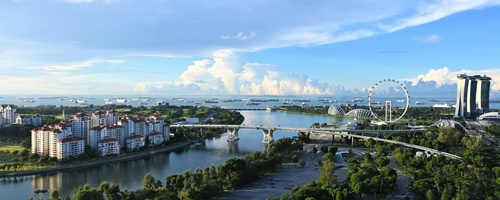
Singapore is a city-state where hotels commonly use English. It suits workers from Malaysia, China, Hong Kong, Macau, South Korea and Taiwan (any hotel line job) and well-paid chefs and managers, but most other passports get few line jobs, or none.
Who hires
Employers apply for Work Permits; non-Malaysians must wait outside Singapore, so do not travel to look for line jobs. Indians, Sri Lankans, Bangladeshis, Filipinos, Thais, Burmese, Bhutanese, Cambodians and Laotians can get a Work Permit only for listed jobs. These are housekeeping and porter jobs in licensed hotels, and cook, kitchen and waiter jobs at firms with a food-shop licence. Most others need an S Pass or Employment Pass.
When hiring happens
S Pass and Employment Pass jobs are usually advertised to Singaporeans for 14 days first. Managers transferred by their company after a year abroad skip this.
Where you live and what it costs
Pay is in Singapore dollars (SGD). Singapore has no minimum wage, but workers from those nine countries must be paid a fixed SGD 2,000 a month or more (about USD 1,550). New S Pass applications from 1 January 2027 need SGD 3,600 a month at 23, more with age (about USD 2,790).
On a Work Permit your employer must ensure proper housing and, with your written consent, may take its cost from your pay, up to 25%; others rent. A worker-dormitory bed averaged SGD 495 a month in early 2026 (about USD 385). Chicken rice averaged SGD 4.25 a plate in September 2026 (about USD 3.30).
Daily life
For most line staff, overtime pays at least 1.5 times your basic hourly rate. Drug offences can carry the death penalty. Vapes are banned, even for personal use. Public drinking is banned from 10:30 pm to 7 am.
Getting there and around
Check your in-principle approval letter for salary, agency fee, name and passport number; errors can mean refused entry. Do not start work until your Work Permit or Temporary Permit letter is issued.
What to watch for
- A Work Permit ties you to one employer and job; you cannot bring family. Even after the permit ends, you may not marry a citizen or permanent resident without government approval, or become pregnant or give birth in Singapore unless already married to one with approval.
- Employers may not keep your passport or deduct the levy, bond, insurance or flight home. Singapore-licensed agencies may charge at most one month's pay per year of service, up to two months, and nothing before your work visa.
- Read your own government's travel advice for Singapore before you travel.
Never pay anyone for a job offer or a visa.
Before you apply
Below this guide, "Can I work in Singapore?" gives the answer for your passport, and "What the job usually comes with" covers housing, meals, flights and leave.
Can I work in Singapore?
Never pay anyone for a visa or a job offer. A real employer pays the permit costs and never asks you for money.
How it works
How it works: Line jobs need a Work Permit only listed countries can get; others need an S Pass (SGD 3,300+ a month, 3,600+ for new applications from January 2027, 10% cap) or an Employment Pass (SGD 5,600+, 6,000+ for new applications from January 2027, points test).
Watch for: Work Permits go only to listed countries. Indians, Sri Lankans, Bangladeshis and Filipinos qualify for hotel housekeeping, porter, cook, kitchen and waiter jobs only, at SGD 2,000+ a month and within an 8% cap. From 29 November 2026 you may start work only after your Work Permit is issued or you hold a Temporary Permit letter; an approval letter alone is not enough.
Official source: Ministry of Manpower: Work Permit requirements for the services sector. Checked November 2026.
What the job usually comes with in Singapore
Usual for Singapore, varies by employer. Checked November 2026.
| Housing | Work Permit staff: employer must ensure proper housing (by law), such as a dorm or shared flat; others rent |
|---|---|
| Meals | Varies |
| Flights | Work Permit staff: flight home paid by the employer at the end (by law); others only if the offer says so |
| Service charge | 10% added to bills; staff share set hotel by hotel, no law; unionised hotels used points or wages (2010) |
| Contract | Work Permit up to 2 years; S Pass and Employment Pass up to 2, then 3; notice 1 day to 4 weeks by default |
| Leave | 7 days in year one, rising to 14 (by law); 11 public holidays; 14 days' sick leave |
| Income tax | 0% up to SGD 20,000 a year, then 2% to 24% (about 3% at SGD 60,000); resident rates on a 1-year pass |
Senior staff often get more than line staff, for example a single room or a yearly home flight. Ask the employer what the job includes before you accept.
Guidance, not legal advice. Rules change; your employer confirms the details for your case.