Welcome to the Sicily Guide!
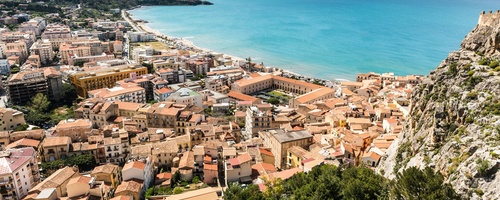
Sicily is Italy's largest island; Italian is the working language and unemployment was 12.2% in 2025. It suits EU citizens seeking April to October hotel work; most non-EU workers need an employer to apply for them.
Who hires
Palermo and Taormina have the most accommodation jobs.
EU, European Economic Area and Swiss citizens need no work permit. Young citizens of Australia, Canada, Hong Kong, Japan, New Zealand and South Korea can get working-holiday visas.
Others mostly come through Italy's quota (decreto flussi); your employer must apply for you by name. Seasonal places go only to citizens of Kenya and 38 listed countries, such as India, Sri Lanka and the Philippines. Citizens of Nepal, Indonesia and other countries can use only non-seasonal places. Outside the quota, managers and highly qualified staff can use company transfers or the EU Blue Card.
When hiring happens
For non-EU seasonal workers, employers prepare forms by 7 December 2026 and apply from 9 February 2027. Once a request has a quota place, the immigration office has 20 days to issue the work authorisation. Requests for workers from Sri Lanka, Bangladesh, Pakistan and Morocco get extra checks and can take longer. Then you apply for a visa.
Where you live and what it costs
Pay is in euros (EUR). Italy has no national minimum wage. From May 2026 the Federalberghi hotel agreement sets a chambermaid's minimum pay at EUR 1,507.45 a month before deductions (about USD 1,660), rising in April 2027.
If your employer houses you on a seasonal permit, the rent may not exceed one third of your pay or be taken automatically from your wages. The tax agency's 2026 rent values put a 40-square-metre flat in Palermo at about EUR 100 to 420 a month (about USD 110 to 460). Listings ask about EUR 410 (about USD 450).
Daily life
The standard week is 40 hours.
Getting there and around
Catania and Palermo have the main airports.
What to watch for
- A seasonal permit names your employer and lasts up to 9 months in 12; the state job platform can match you with another. Official visa and permit fees cost you up to about EUR 230 (about USD 255). The employer must promise in writing to pay your journey home. Agencies authorised in Italy may not charge line staff fees.
- Signs of exploitation are pay far below the hotel agreement, unsafe work, degrading housing and an employer who keeps your passport. If you are trafficked or seriously exploited, call 1577; the anti-trafficking line answers in English.
- In 2026 wildfires hit Sicily and Etna ash repeatedly closed Catania airport.
- Read your own government's travel advice for Sicily before you travel.
Never pay anyone for a job offer or a visa.
Before you apply
The jobs in Sicily on MyIslandJob are linked below this guide.