Welcome to the Fiji Guide!
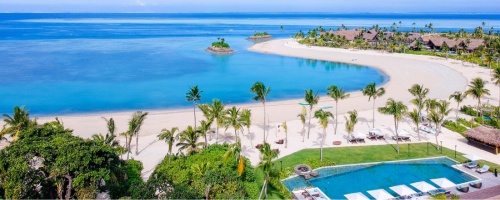
Fiji is a holiday country with about 986,000 visitors in 2025, mostly from Australia and New Zealand. It suits experienced chefs, managers and specialists whose employer can sponsor a work permit.
Who hires
Licensed hotels and resorts had about 10,000 rooms and 14,400 staff in June 2026. On the main island, Viti Levu, the Nadi area has about 37% of the rooms, the Coral Coast 18% and Suva 17%. The Mamanuca and Yasawa islands have 12%. Dive operators, hospitals, international schools and banks also hire.
When hiring happens
Hotel work is year-round. The busiest months are June to September and the quietest January to March.
Where you live and what it costs
Resorts on the small islands usually house and feed staff. Hotels on Viti Levu, where most rooms are, often do not, so ask. Crowd-reported prices (2026) put a one-bedroom flat outside a town centre at about FJD 930 a month on average (about USD 410) and about FJD 1,450 in Nadi (about USD 640). The same reports put a cheap restaurant meal at about FJD 12 (about USD 5), or FJD 20 in Nadi (about USD 9), and a bus ride at about FJD 1.55 (about USD 0.70). The minimum wage is FJD 5.00 an hour in 2026 (about USD 2.20). Imported groceries and cars are expensive.
Daily life
English is the language of business, government and school. At home most people speak Fijian or Fiji Hindi. Christian, Hindu and Muslim days are public holidays. Cover your shoulders and knees in villages. Drug laws are strict: even a small amount of cannabis can mean prison. Medical care is limited and hospitals usually want payment first. Serious cases are often flown abroad.
Getting there and around
The main airport is Nadi International. Direct flights come from Australia, New Zealand, Singapore, Hong Kong, Tokyo and North America. From South Asia, Africa, Europe or Latin America you change planes. Boats leave Port Denarau daily for the Mamanuca and Yasawa islands. Canadian travel advice calls the buses poorly maintained. Use only taxis and minibuses with yellow number plates, the licensed ones.
What to watch for
- Shop-floor, warehouse, factory and airline cabin crew or ground staff jobs look hard for foreigners to get. Managers and specialists fit better.
- Pay is in Fijian dollars and is low against rents.
- A national newspaper reported in June 2026 that foreign workers have long complained about housing, pay and treatment. Check what your contract says on housing and pay.
- The cyclone season is November to April and peaks from January to March.
- Read your own government's travel advice for Fiji before you travel.
Never pay anyone for a job offer or a visa.
Before you apply
Below this guide, "Can I work in Fiji?" gives the answer for your passport, and "What the job usually comes with" covers housing, meals, flights and leave.
Can I work in Fiji?
Never pay anyone for a visa or a job offer. A real employer pays the permit costs and never asks you for money.
How it works
How it works: Employer-sponsored permit for skilled roles; paperwork eased in September 2026; 3 to 6 months.
Official source: Fiji Immigration: overseas employees. Checked November 2026.
What the job usually comes with in Fiji
Usual for Fiji, varies by employer. Checked November 2026.
| Housing | Island resorts house and feed staff; mainland hotels often not |
|---|---|
| Meals | Duty meals |
| Flights | Varies |
| Service charge | Not customary; a staff Christmas fund instead |
| Contract | Permit 1 to 3 years |
| Leave | 10 working days |
| Income tax | Residents 0% to FJD 30,000, then 18% to 20%; non-residents 20% |
Senior staff often get more than line staff, for example a single room or a yearly home flight. Ask the employer what the job includes before you accept.
Guidance, not legal advice. Rules change; your employer confirms the details for your case.